


News
News from the GKS
Notice regarding publications created
Information regarding website posts created before 27.09.2026:
The documents and information provided on the GKS website are intended solely to document the activities of GKS-Gemeinschaftskraftwerk Schweinfurt GmbH. They reflect the factual and legal status as well as the underlying data applicable on the publication date stated and are not updated after publication.
All information, in particular statements relating to environmental or sustainability matters, key figures, targets and forecasts, refers exclusively to the respective point in time and the methodological and legal framework applicable at that time. Such information does not constitute a statement about current or future characteristics of products, services or activities and does not constitute advertising for specific products or services or an offer. Whether and in what form any targets or statements of intent referred to therein are continued is determined exclusively by the respective current publications.
Behavior of PFAS in Waste Incineration Plants
Behavior of PFAS in Waste Incineration Plants
Results of a Full-Scale Test at the Thermal Waste Treatment Plant in Schweinfurt (GKS)
GKS-Statement-PFAS testrun in full-scale TWT plant-2026_04_30 (PDF, 0,24 MB)
Sewage Sludge Incineration deferred
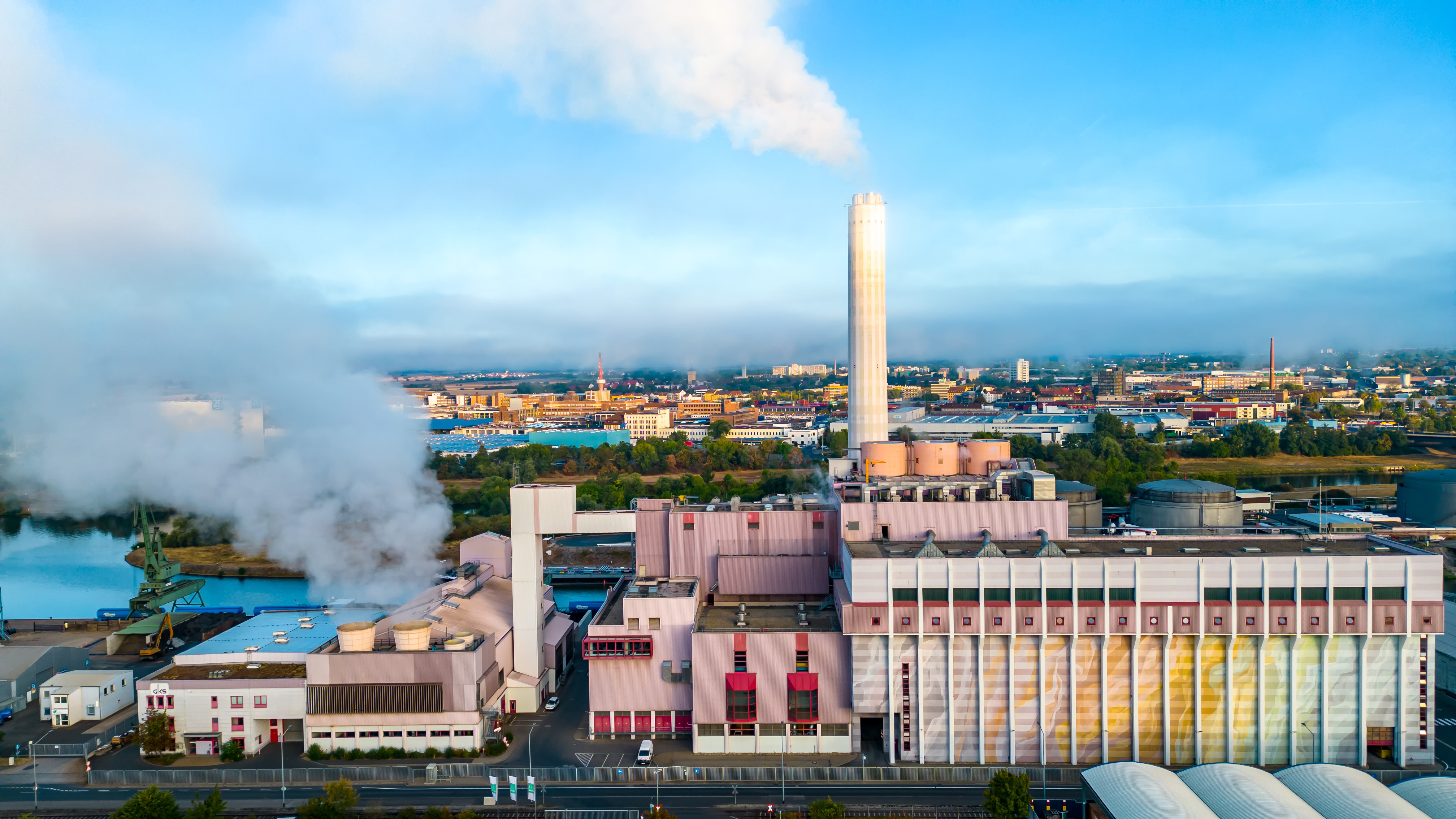
GKS has planned to invest € 84 million euros to prepare for large-scale sewage sludge incineration.
As recently as November 2024, everything seemed to be finalized, at least as far as the plans were concerned. The plans were in place. GKS wanted to invest 84 million euros in order to be able to burn dry sewage sludge on a large scale instead of coal in the future. It was slated to be one of only a few power plants in Bavaria to do so. That has now changed.
A shareholders meeting was recently held. On Tuesday, the GKS issued a press release. Its main point: The plans are deferred. "The planned conversion to incinerating the dry sewage sludge from the region will be postponed for the time being," it says.
The company intends to stick to its plan to phase out coal. However, this will be achieved through different means, and gradually starting in 2026. "The current CO2-intensive coal combustion will be replaced in a first step by converting to hydrogen-compatible gas boilers," GKS announced. The announcement mentions two to three gas boilers. Subsequently, at least one coal boiler will be converted to "biogenic fuels," specifically wood pellets.
New association for sewage sludge recycling: 40 municipalities join forces for phosphorus recovery
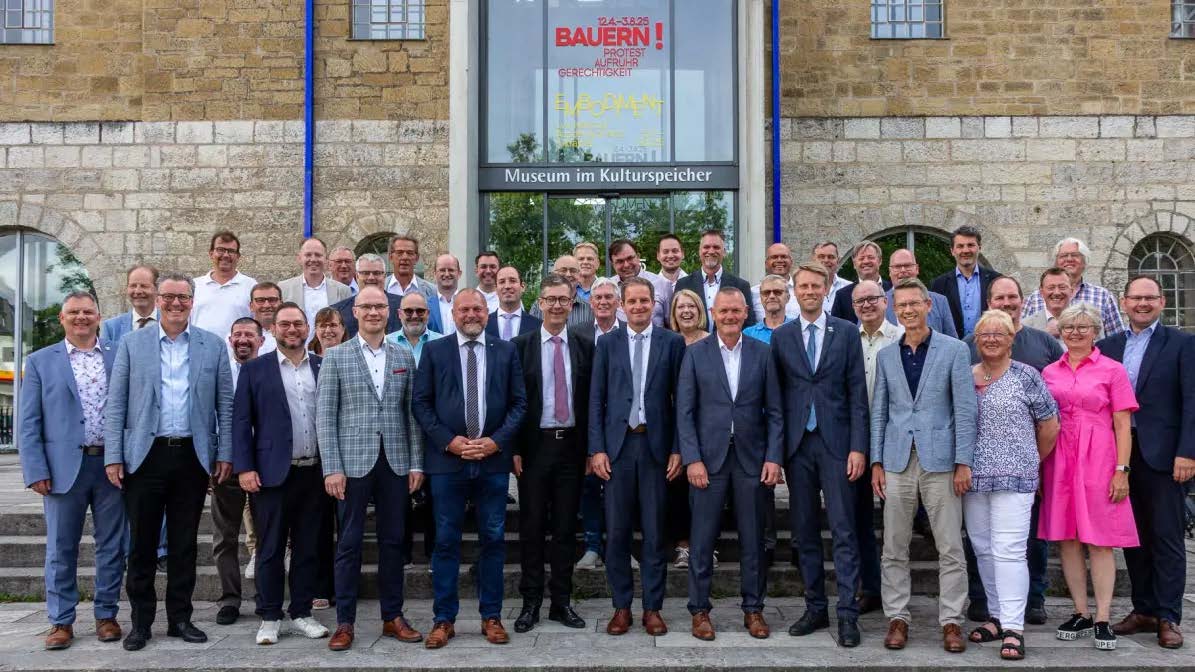 The representatives of the member communities at the founding of the Zweckverband Klärschlammverwertung (Association for Sewage Sludge Recycling) at the end of June. Photo: Christian Weiß (City of Würzburg)
Regional cooperation sets standards in the circular economy: Dried sewage sludge will partially replace coal and achieve phosphorus recovery in the future
From the end of this decade, sewage sludge must be processed and the phosphorus contained in it recovered. This is what the legislator wants. 40 municipalities from Lower and Middle Franconia as well as the Main-Tauber district have now joined forces to form the Main-Tauber-Aisch sewage sludge recycling association in order to master this task together, reports a press release. It is not only about the conservation of natural phosphate deposits, but also about the extraction of renewable energy. The power plant in Schweinfurt (GKS) and the waste-to-energy plant in Würzburg (MHKW) play a central role in the plans.